
Introduction
The United States Citizenship and Immigration Services (USCIS) has implemented significant policy updates concerning family-based immigrant visa petitions, with the new guidelines effective as of August 1, 2025.
As USCIS itself put it, “fraudulent, frivolous, or otherwise non-meritorious family-based immigrant visa petitions erode confidence in family-based pathways to lawful permanent resident (LPR) status and undermine family unity in the United States.” This new guidance is designed to put everyone on the same page and make sure that only real, verifiable family ties lead to a green card. Let’s break down what these new rules mean for you.
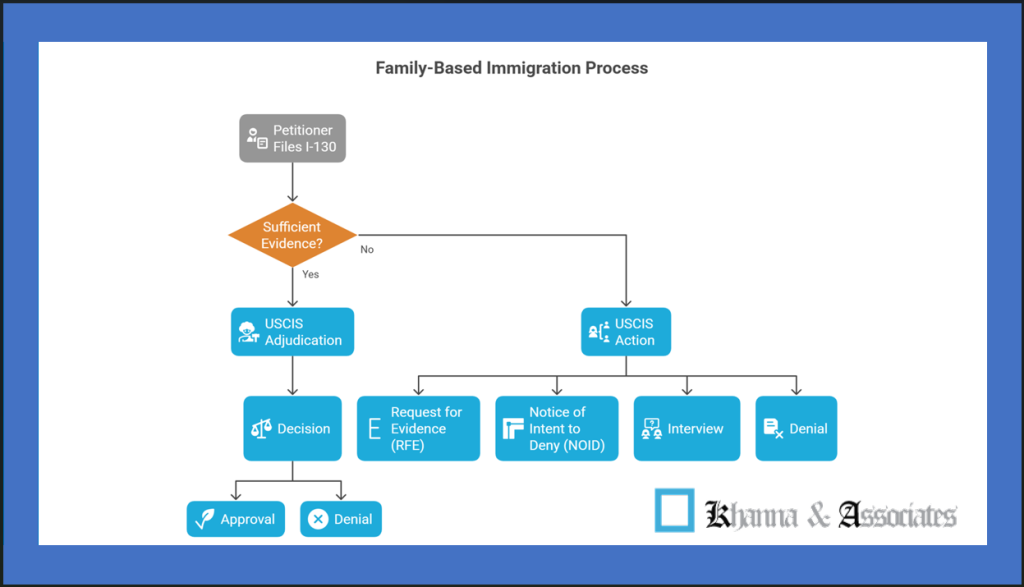
What’s Changed? A Closer Look at the New Policies
These updated rules are all about a more thorough review process. The government is making it clearer than ever what they expect from applicants and how they plan to check everything.
- Who can file and what you need: The new policy provides very clear guidelines on who is eligible to file a petition. It also gives a detailed list of all the documents you must submit. This is a big one, as missing even one document can cause major delays.
- Multiple petitions get extra scrutiny: If a single person files multiple petitions for different relatives—or if there are other related filings—USCIS is now officially taking that into account. They’ll look at these situations more closely to ensure there’s no funny business.
- Filing from abroad: For U.S. citizens living overseas, especially military members and government employees, there are now clearer rules on when you can file a petition directly from your location abroad. This is a helpful clarification for those serving our country overseas.
- Where your approved case goes: After USCIS approves a petition, if the person applying for the green card can’t adjust their status inside the U.S., the case will be sent to the National Visa Center to continue the process abroad.
- Interviews are now a bigger deal: USCIS is making it clear when they’ll call both the person who filed the petition (the petitioner) and the person applying for the green card (the beneficiary) for in-person interviews. This is a key step for verifying a relationship’s authenticity.
- Approval isn’t a free pass: This is a super important point. Just because your petition is approved doesn’t mean the person is now legally in the clear. They still have to be found eligible for a green card. If they aren’t, USCIS can still start the process of removing them from the country.
Qualifying Relationships for Family-Based Immigration
A foundational requirement for a family-based immigrant visa petition is establishing a “qualifying relationship” between the petitioner and the beneficiary. This relationship must exist at the time of filing the Form I-130 and must remain valid throughout the entire adjudication process. It is the responsibility of the petitioner to demonstrate this relationship to USCIS.
Here is a breakdown of the relatives who can be sponsored, depending on the petitioner’s immigration status:
U.S. Citizen Petitioners may file a Form I-130 on behalf of:
- Spouse
- Child (unmarried and under 21 years old)
- Parent (if the U.S. citizen is at least 21 years old)
- Unmarried son or daughter, age 21 or older
- Married son or daughter of any age
- Sibling (if the U.S. citizen is at least 21 years old)
Lawful Permanent Resident (LPR) Petitioners may file a Form I-130 on behalf of:
- Spouse
- Child (unmarried and under 21 years old)
- Unmarried son or daughter, age 21 or older
It is important to note that the status of the petitioner, whether a U.S. citizen or an LPR, significantly impacts the types of relatives they can sponsor and the visa category under which the beneficiary will be classified. This, in turn, affects the waiting times and visa availability.
FAQs
Q1: Do these new rules apply to my pending application?
Yes. The policy guidance is effective immediately and applies to all pending petitions, as well as new ones filed on or after August 1, 2025.
Q2: Will my family member and I both have to go to an interview?
It’s more likely now than before. The new rules specify when USCIS will require in-person interviews for both the petitioner and the beneficiary to verify the relationship.
Q3: Where can I find the official USCIS Policy Manual?
You can access the full manual on the official USCIS Policy portal. This is a great resource to get all the details straight from the source.
Q4: My family member is a U.S. citizen living abroad. Can they file for me from there?
The new rules clarify that U.S. citizens living abroad, particularly military and government employees, can file petitions directly from overseas in some situations.
Final Thoughts
These new policy updates from USCIS are a clear signal that the agency is serious about protecting the integrity of the family-based immigration system. The rules are designed to make it harder for fraudulent applications to slip through the cracks. For you, the takeaway is simple, be prepared, be honest and provide every single document requested. The more thorough and accurate your application is from the start, the smoother the process will be.