
Introduction
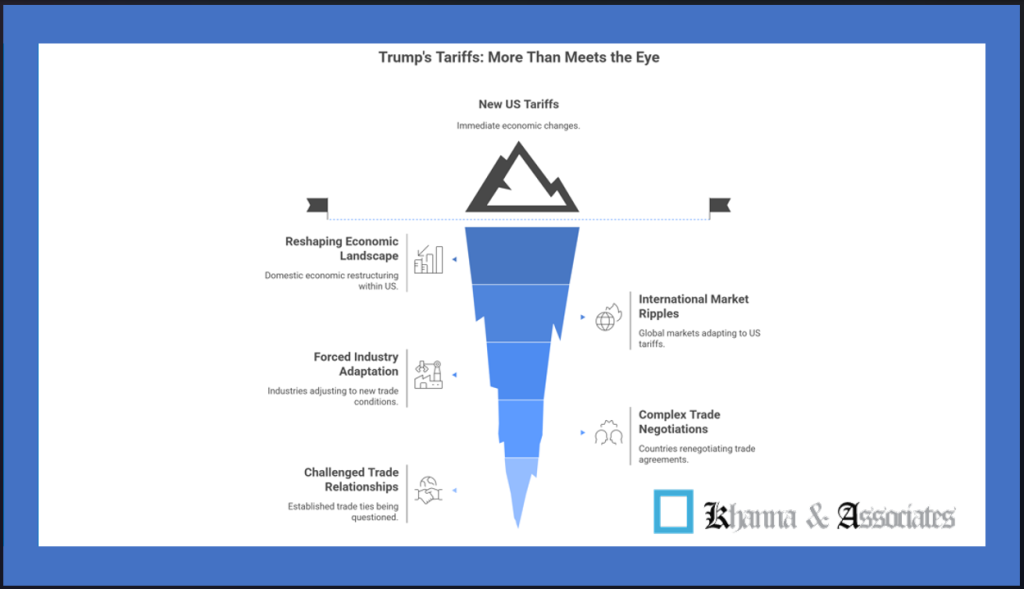
In the world of international relations, economic policy can sometimes be a powerful and controversial tool. The Trump administration’s recent and widespread use of the US tariff is a prime example. The core principle behind this strategy is to impose taxes on imported goods, which in turn makes them more expensive for consumers and businesses. The stated objective is to stimulate domestic production, foster investment, and create new jobs within the United States. However, this approach to the tariff has not been without its critics, and the actual consequences on the global stage have proven to be both complex and far-reaching.
Broad-Ranging US Tariff Hikes
Just recently, a new wave of broad US tariff hikes went into effect, and they’re hitting a lot of countries and products. For instance, goods from places like the European Union, Japan, and South Korea are facing a 15% import tax, while products from Taiwan, Vietnam, and Bangladesh are getting a 20% US tariff.
One of the most dramatic recent moves has been the US tariff on India, which now stands at an eye-watering 50%. This additional duty is a response to India’s continued purchase of Russian oil and is expected to hit their exports hard, especially in sectors like textiles, gems, and leather. This particular US tariff puts India and Brazil at a significant disadvantage, as they now face the highest duty rate in the US market.
Is the US Tariff Backfiring?
So, is this US tariff strategy working? Well, the data so far suggests it might be a case of self-inflicted wounds. Economic reports show that after the initial tariffs were rolled out, hiring began to slow down and prices started to creep up. It’s a tricky situation because the ultimate consequences of US tariffs can take months, or even years, to fully unfold. As one expert put it, it’s not a sudden explosion, it’s more like a slow, steady erosion of the economy.
One of the main reasons for these tariffs was to shrink the US trade deficit. However, importers, trying to avoid the taxes, rushed to import more goods before the new US tariff went into effect. As a result, the trade imbalance actually grew. According to the U.S. Census Bureau, the goods trade deficit with China was almost $300 billion in 2024.
How the US Tariff is Impacting Trade Partners
The pain isn’t just felt in the U.S. Germany, which sends a big chunk of its exports to the U.S., saw its industrial production drop. This new, 50% US tariff on India has caused huge dismay. The Federation of Indian Export Organizations (FIEO), a top exporter’s body, has warned that over half of the country’s shipments to America could be impacted. Similarly, top officials from Switzerland had to rush to Washington in a last-ditch, and ultimately failed, effort to prevent a steep 39% US tariff on their goods.
The way these tariffs have been implemented has been pretty chaotic, with various changes, delays, and last-minute announcements. This kind of unpredictability is creating a huge headache for businesses everywhere and is one of the reasons a senior Indian diplomat called the latest US tariff move “unilateral” and lacking “logic or reason.”
What’s Next for This US Tariff Turmoil?
It’s a complicated mess. The legality of using a 1977 law to declare an “economic emergency” to impose these tariffs is even being challenged in court. A ruling could potentially force the administration to find a new legal basis for its actions.
Frequently Asked Questions (FAQs)
Q1: Are there legal challenges to the new tariffs?
Yes, the use of a specific law to declare an “economic emergency” to impose the US tariff is being questioned in court.
Q2: How is the new US tariff impacting India?
The US tariff on India has been increased to a total of 50% on many goods. This is expected to significantly harm key Indian export sectors like textiles, gems, and leather.
Conclusion
This whole US tariff saga is a wild ride. While the goal of boosting American manufacturing is understandable, the reality of implementing these policies is creating a lot of uncertainty and stress for businesses and consumers worldwide. The long-term effects of this new US tariff framework are still unknown. But one thing is clear, the global economy is in for a bumpy ride.