
Introduction
Experiencing financial hardship can be incredibly stressful, whether you’re an individual or a business. At Khanna and Associates, a prominent law firm in India, we understand these challenges deeply. Our team of seasoned legal professionals specializes in the complexities of bankruptcy and insolvency law, providing dedicated support and expert guidance to help our clients through these difficult times.
What is Financial Distress? A Look at Bankruptcy and Insolvency
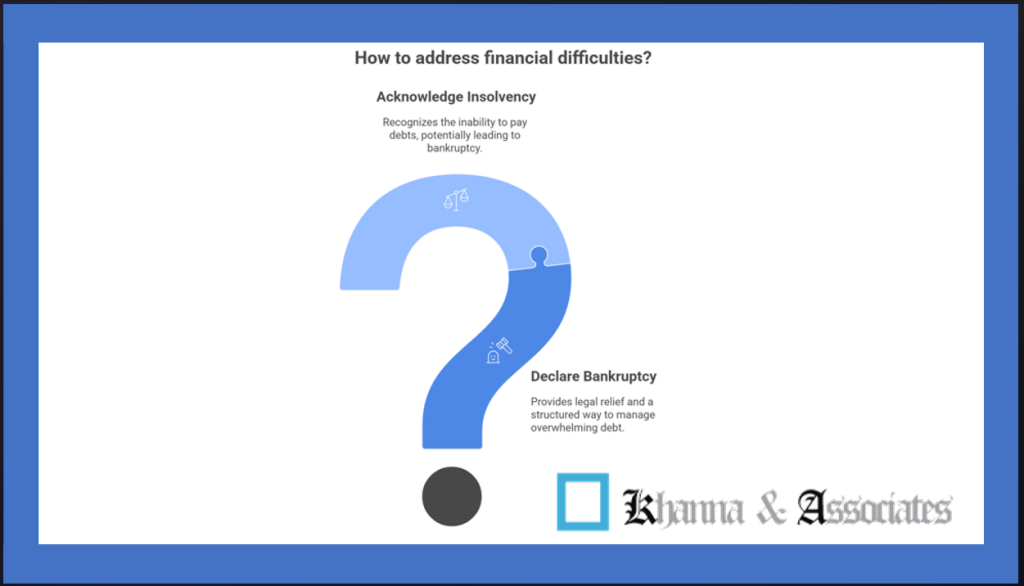
When an individual or company can no longer meet their financial obligations, they are considered to be in a state of financial distress. This can lead to either insolvency or bankruptcy. While often used interchangeably, these terms have distinct meanings:
- Insolvency generally refers to a state where an entity’s liabilities exceed its assets, or they are unable to pay debts when they fall due. It’s a financial condition.
- Bankruptcy is a legal process, typically initiated when an insolvent individual or entity seeks formal relief from their debts under the law.
Our legal practice is dedicated to helping clients navigate the various aspects of these situations.
Key Areas of Our Financial Restructuring Services
We offer comprehensive legal services tailored to address a wide range of issues related to financial challenges and the process of debt resolution:
1. Guiding Through Insolvency Proceedings
The process of initiating or responding to insolvency actions can be intricate. We assist clients at every step, from preparing and filing insolvency petitions to vigorously defending against them. Our lawyers also provide robust representation in any litigation that arises from insolvency matters. Understanding the Insolvency and Bankruptcy Code, 2016 is crucial here.
2. Crafting Effective Debt Restructuring Strategies
When facing overwhelming debt, restructuring can offer a viable path forward. We provide expert legal advice on various debt reorganization methods, including:
- Debt Consolidation: Combining multiple debts into a single, often lower-interest, payment.
- Rescheduling: Adjusting payment terms to make them more manageable.
- Other Debt Restructuring Arrangements: Exploring various options to alleviate financial burden and create sustainable payment plans.
3. Advising on Corporate Financial Restructuring
For businesses facing severe financial distress, corporate restructuring or bankruptcy may be necessary. We advise companies on various aspects, including:
- Understanding Different Bankruptcy Chapters: While the Indian legal framework has its own provisions, internationally, terms like “Chapter 7” (liquidation), “Chapter 11” (reorganization), and “Chapter 13” (individual reorganization, though primarily applicable in the US context) illustrate different approaches to bankruptcy. Our focus is on the equivalent provisions under Indian law, guiding companies through processes like Corporate Insolvency Resolution Process (CIRP) and liquidation.
- Developing Reorganization Plans: Assisting businesses in creating and implementing strategic plans to regain financial stability and continue operations where possible.
The Insolvency and Bankruptcy Board of India (IBBI) is the key regulatory body for insolvency professionals and processes in India.
4. Protecting Creditors’ Interests
We also represent the rights of creditors during insolvency and bankruptcy proceedings. This includes safeguarding their interests in:
- Debt Collection: Ensuring lawful and effective recovery of outstanding dues.
- Secured Transactions: Protecting assets pledged as collateral.
- Other Related Issues: Addressing any concerns that arise during the process to ensure fair treatment and recovery for creditors.
Why Partner with Khanna and Associates?
Choosing the right legal partner is paramount during times of financial uncertainty. Here’s what sets us apart:
- Vast Experience: Our legal team possesses deep knowledge and extensive experience in the field of bankruptcy and insolvency law, equipping us to handle even the most intricate legal challenges.
- Tailored Solutions: We believe every client’s situation is unique. We dedicate ourselves to understanding your specific needs and objectives, crafting personalized legal strategies that align with your goals.
- Results-Driven Approach: Our primary focus is on achieving the most favorable outcomes for our clients. We are committed to providing practical, efficient, and cost-effective solutions to complex legal problems.
- Proactive Stance: The legal landscape is constantly evolving. We stay abreast of the latest industry trends and regulatory changes, allowing us to offer proactive advice and keep our clients well-informed.
FAQs
Q1: What is the main difference between insolvency and bankruptcy in India?
Insolvency is a state of financial distress where an individual or company cannot pay their debts. Bankruptcy, under the Indian legal system, refers to a legal process, primarily for individuals, to seek relief from debts when insolvent. For companies, the process is typically referred to as the Corporate Insolvency Resolution Process (CIRP) under the IBC.
Q2: Can individuals file for bankruptcy in India?
Yes, individuals can file for insolvency and bankruptcy under the Insolvency and Bankruptcy Code, 2016, specifically under the provisions related to individual insolvency.
Q3: What is the Corporate Insolvency Resolution Process (CIRP)?
The CIRP is a time-bound process under the IBC for resolving insolvency of corporate debtors. It aims to maximize the value of assets, promote entrepreneurship, and balance the interests of all stakeholders.
Q4: How long does an insolvency proceeding typically take in India?
The Insolvency and Bankruptcy Code sets strict timelines for different stages of insolvency proceedings. For example, the CIRP for corporate debtors is generally expected to be completed within 330 days, including any extensions. However, actual timelines can vary depending on the complexity of the case.
Q5: What are the consequences of bankruptcy for an individual?
Consequences can include restrictions on financial activities, potential loss of assets (subject to exemptions), and a negative impact on credit scores. However, the process also offers a fresh start by discharging certain debts.
Conclusion
Navigating financial distress requires not only a clear understanding of the law but also strategic guidance and empathetic support. At Khanna and Associates, we are committed to providing exactly that. Our expertise in bankruptcy and insolvency law, combined with our client-centric approach, ensures that you receive the best possible legal representation to overcome financial challenges and move towards a more stable future. If you are facing such circumstances, reaching out for professional legal advice is the crucial first step.