
Introduction
In a move that’s got the world talking, the US and China have once again hit the pause button on their escalating trade war. Just as a new round of sky-high US tariffs was about to kick in, both nations agreed to a 90-day extension of their trade truce, a decision that breathes a collective sigh of relief for global markets. This temporary peace, lasting until November 10, buys crucial time for the world’s two largest economies to continue their “constructive” talks and work towards a more permanent solution.
This extension means that Washington will hold off on imposing even steeper US tariffs on Chinese goods, while Beijing will reciprocate by keeping its tariffs at their current, elevated-but-not-catastrophic level. Previously, a failure to reach an agreement would have seen duties on Chinese imports to the US soar to an eye-watering 145%, and American goods entering China would have faced a punitive 125% tariff. The current arrangement keeps the US tariffs on Chinese imports at 30% and the Chinese tariffs on American goods at 10%.
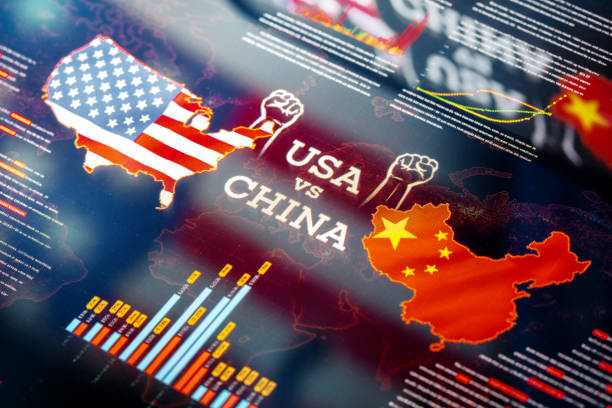
The White House, under an executive order signed by President Donald Trump, said this additional time is for addressing deep-seated trade imbalances and what it calls “unfair trade practices”. The US is particularly focused on its massive trade deficit with China, which was nearly $300 billion in 2024. The negotiations will also tackle issues like market access for American companies in China and broader economic and national security concerns.
For its part, China’s embassy in Washington has expressed a desire for “win-win cooperation”, while also urging the US to lift its “unreasonable” trade restrictions. Beijing is also focused on maintaining stability in the global semiconductor industry, a key point of contention given recent restrictions on tech sales.
What These Tariffs Means for Global Trade and India
This fragile truce between the two economic giants is a big deal for the global economy. When US tariffs and China tariffs are in flux, it creates a domino effect that can be felt everywhere. Companies around the world, especially those deeply integrated into the US-China supply chains, are often forced to look for alternatives, leading to market uncertainty and price volatility.
For India, a country that has been navigating its own complex trade relationship with the US, these developments are particularly significant. India is already facing a substantial 50% tariff on many of its goods from the US, a measure that has put a spotlight on the challenges of balancing its own strategic interests, such as its energy trade with Russia, with its key partnerships. The US-China truce offers a moment of relative calm, but it also highlights the need for India to diversify its trade partners and strengthen its domestic manufacturing sectors to withstand such geopolitical pressures. The ongoing trade negotiations between the US and China, with their focus on specific sectors like technology and agriculture, could create both opportunities and risks for India’s economy.
Trump’s Policies and Their Impact
The current trade tensions date back to when Trump first unveiled a series of new tariffs on goods from countries all over the world, with Chinese imports taking some of the heaviest hits. Beijing’s response was swift, with its own tariffs turning the situation into a full-blown tit-for-tat trade conflict. These measures, at one point, threatened to bring trade between the two nations to a grinding halt.
While the two sides had previously agreed to reduce some of these barriers, the current tariffs have still had a noticeable impact. US government data shows that imports of Chinese goods have dropped significantly, and American exports to China have also fallen. This shows how quickly these tariffs can affect actual trade flows.
Beyond the broad-based duties, discussions are ongoing about other sensitive issues. The US is pressing for greater access to China’s rare earth minerals, a critical component for many high-tech products. There are also continued US curbs on the sale of advanced technology, including high-end chips, which has been a major point of friction.
Interestingly, some of these export restrictions have been relaxed recently. For example, companies like AMD and Nvidia can now sell certain chips to China, but with a unique condition: they must share 15% of their revenues from those sales with the US government. This move illustrates a new and more complex layer to the ongoing trade saga. The US is also pushing for the popular social media platform TikTok to be spun off from its Chinese parent company, ByteDance, a move that Beijing has strongly opposed.
In the midst of these high-stakes discussions, Trump has been vocal on social media, expressing optimism while also calling on China to increase its purchases of US soybeans, a key demand from American farmers.
Conclusion
The decision by the US and China to extend their trade truce is a welcome sign of de-escalation, even if it’s just for a limited time. It’s a clear recognition that the massive US tariffs and Chinese tariffs that were on the horizon would have had a damaging effect on both economies and the world at large. By continuing talks, they are providing a much-needed window for diplomacy to find a middle ground.